

Headrest Hook Weight Limits: Why Bags Swing Loose and How to Fix It
You hang a grocery bag on the back of the front seat, drive off, and by the first corner it is swinging into the passenger's knees.
1. The Problem: The Bag That Will Not Stay Put
A headrest hook promises extra hanging space where none exists.
The good news is that these problems follow predictable patterns.
2. Why Headrest Hooks Fail: Weight, Posts and Swing
Three factors explain most failures.
Load beyond the rating. Every hook is built for a stated maximum weight. A bag of canned goods, a laptop backpack or a full water bottle can exceed what a lightweight hook was designed to carry.
Poor grip on the posts. Most hooks clamp or slide onto the two metal posts that hold the headrest. If the posts are thick, thin or unusually far apart, the hook may sit loosely and rock under load.
Motion. Even a moderate load behaves differently in a moving car. Braking and cornering add momentum, so a bag that feels fine when parked can swing hard once you drive.
3. Check Your Headrest Before You Choose a Hook
Before browsing, take two minutes to look at the seat itself.
- Post spacing: Measure the gap between the two posts. Many hooks are made for a typical range, and unusual spacing is a common cause of wobble.
- Post diameter: Note how thick the posts are. A hook designed for one thickness may not seat firmly on another.
- Headrest type: Some seats have integrated or fixed headrests with no visible posts. These generally cannot accept a standard hook, so confirm before ordering.
- Adjustability: Check that the headrest still moves up and down freely, since a hook should not block that adjustment.
Write the measurements down. They make it much easier to compare product details against your car.
4. Reading the Hook Itself: Material, Rating and Shape
When you look at options in the headrest hooks collection, focus on construction rather than appearance.
Material. Metal-reinforced designs and sturdy, thick plastics generally tolerate load better than thin, brittle plastic. Look for descriptions that mention heavy-duty construction and be cautious of vague claims.
Stated capacity. Treat the manufacturer's weight rating as a ceiling, not a target. Staying comfortably below it leaves margin for braking and bumps.
Hook shape. A deeper curve with a lip at the end helps keep handles from slipping off. A flat, shallow hook lets straps slide free when the car moves.
Swivel or fixed. A hook that rotates can fold flat when not in use, which keeps it from poking rear passengers. A fixed hook is simpler but always protrudes.
Single or multiple. Some sets include two hooks, useful when you want to spread a load or separate a bag from loose items.
5. Installing a Hook So It Stays Steady
Good installation prevents most swinging before it starts.
- Lower the headrest slightly if needed so you can reach the posts and see where the hook will sit.
- Seat the hook fully against both posts. A hook perched halfway will tilt as soon as weight is added.
- Tighten or secure it according to the product's design, then test by pulling gently downward and side to side.
- Raise the headrest to a comfortable position and confirm the hook does not push against the occupant's head or neck.
- Test with a light load first, then build up to your usual items.
If the hook rocks even with nothing on it, the fit is wrong for your posts, and adding weight will only make it worse.
6. Loads That Suit a Hook, and Loads That Do Not
Hooks excel at light to moderate items you want off the seat and floor.
Well suited:
- Grocery bags with soft goods such as bread, produce or lightweight packaging
- A purse or handbag you want within easy reach
- A small backpack or gym bag
- A jacket or umbrella in a bag
Better kept elsewhere:
- Glass jars, bottles and cartons of liquids that can tip and spill
- Heavy tool bags or laptop cases with sharp or hard edges
- Anything fragile that would be damaged if it swung into the seat back
For heavier or fragile loads, a trunk organizer keeps items upright and separated, which is safer than letting them dangle from a post.
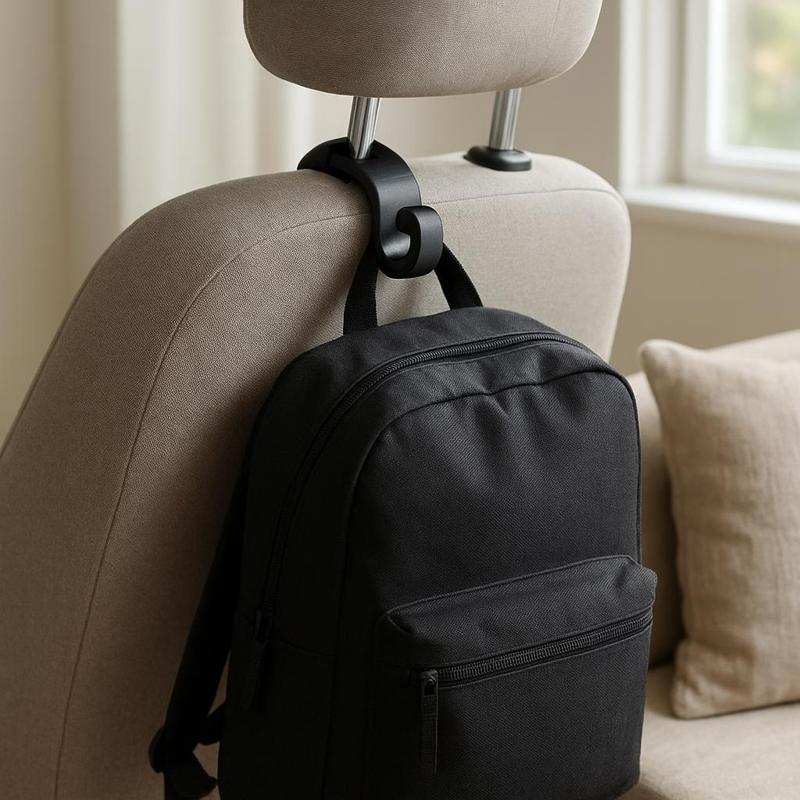
One more consideration: a hanging bag sits at the height of the front occupant's seatback and close to the rear passenger's legs.
7. Care and Inspection Routine
A hook is a small part, but it deserves a quick check now and then.
- Look for stress marks. Hairline cracks, whitening in plastic or a bent arm are signs the hook has been overloaded. Replace it rather than hoping it holds.
- Wipe it clean. Dust and sticky residue from spills reduce grip. A damp cloth and mild soap are usually enough, followed by drying.
- Check tightness. Vibration over time can loosen a fit. Give the hook a gentle tug each month or before a long trip.
- Watch the posts. Make sure the hook is not scratching the metal or the headrest trim, which can happen if it slides repeatedly.
- Fold or remove when idle. If you rarely use the hook, folding it away reduces wear and keeps the cabin tidy.
Heat can soften some plastics, so if your car sits in strong sun, inspect the hook more often during summer.
8. Pairing Hooks with Other Storage
Hooks work best as one part of a simple system.
For small items that tend to slide around, a backseat organizer gives phones, snacks and tablets a fixed home, so the hook does not have to carry them. For loose cargo at the back, cargo nets and storage bags stop shopping from shifting across the trunk.
If your main complaint is small objects dropping between the seat and console, a seat gap organizer solves a different problem than a hook and is worth considering alongside it.
Dividing storage by purpose means each accessory works within its limits. You can browse the full range at DriveLab when you are ready to build a setup that fits your car and your routine.
9. Summary
Most headrest hook problems come down to three things: a load heavier than the hook was built for, a loose fit on the posts, and motion that magnifies both.
- Measure your headrest posts and confirm the seat has them.
- Choose a sturdy hook with a clear rating, and stay well under it.
- Seat the hook fully and test it before loading it.
- Keep loads light, soft and compact; send heavy or fragile items elsewhere.
- Inspect and clean the hook regularly, and replace it at the first sign of stress.
With the right match between hook, headrest and load, a bag stays where you hang it, and the drive stays calm.